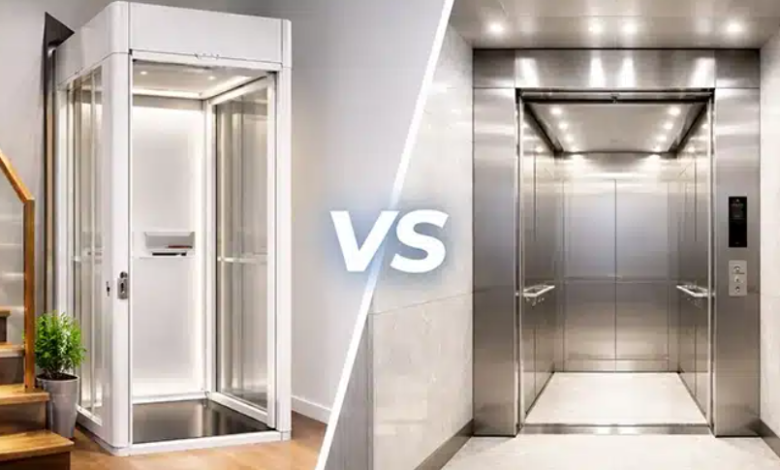
A custom elevator for a private home and a custom elevator for a commercial building might look similar from the outside, but they are built for very different purposes.
This guide breaks down the key differences between home and commercial custom elevators, covering cost, size, safety codes, and design choices, so you know exactly what to expect for your project.
Table of Contents
- Quick Overview
- Size and Capacity Differences
- Cost Differences
- Design and Finish Differences
- Safety Code and Inspection Differences
- Usage Frequency and Durability
- Which One Do You Need?
- Questions to Ask Before You Buy
Quick Overview
A home custom elevator is designed for personal, low-frequency use, usually serving two to four floors in a private residence. A commercial custom elevator is built for higher traffic, heavier loads, and stricter safety regulations in office buildings, hotels, or retail spaces.
While both can be fully customized in style and features, the underlying engineering and cost structure are quite different.
Size and Capacity Differences
| Feature | Home Custom Elevator | Commercial Custom Elevator |
| Typical capacity | Up to 950 lbs (2-4 passengers) | 2,000 – 5,000+ lbs |
| Cab size | Compact, fits residential space | Larger, built for higher traffic |
| Floors served | Usually 2-4 floors | Often 4 floors or more |
| Usage frequency | Low, personal use | High, continuous daily traffic |
Cost Differences
| Elevator Type | Typical Cost Range |
| Custom home elevator | $25,000 – $100,000+ |
| Custom mid-rise commercial elevator | $75,000 – $200,000 |
| Custom high-rise commercial elevator | $150,000 – $500,000+ |
Commercial elevators cost more mainly due to higher weight capacity requirements, more frequent use, and stricter code compliance needs compared to home installations.
Design and Finish Differences
Home elevators often prioritize personal style, matching interior decor with wood paneling, mirrors, or glass walls. Commercial elevators balance style with durability, since finishes need to withstand constant daily use from many different people.
- Home: custom wood finishes, decorative lighting, personalized cab size.
- Commercial: durable stainless steel or laminate panels, reinforced flooring, higher-capacity lighting systems.
Safety Code and Inspection Differences
Both home and commercial elevators must meet local safety codes, but commercial elevators typically face stricter inspection schedules due to higher passenger volume and public access.
- Home elevators: less frequent inspections, though still legally required in most areas.
- Commercial elevators: regular scheduled inspections, often required multiple times per year.
- Commercial buildings often require ADA-compliant features as a standard, not an optional upgrade.
Usage Frequency and Durability
A home elevator might run a handful of times per day, while a commercial elevator in an office tower can run hundreds of times daily. This difference directly affects the drive system and parts chosen for durability.
- Home elevators often use pneumatic or hydraulic drives suited for lighter, less frequent use.
- Commercial elevators commonly use gearless traction systems built for continuous, high-frequency operation.
Which One Do You Need?
If you are adding accessibility or convenience to a private home, a custom home elevator, sized and styled for personal use, is the right choice. If you are outfitting an office building, hotel, or retail space, you need a commercial-grade custom elevator built for higher capacity and constant use.
Mixed-use buildings sometimes need both, with a home-style elevator for private residential floors and a commercial system for shared public areas.
Questions to Ask Before You Buy
- How many people will use the elevator daily, and how heavy are typical loads?
- What local safety codes apply to your specific building type?
- Do you need ADA-compliant features as part of your design?
- What is your realistic budget for both installation and ongoing maintenance?
- Is this a new construction project or a retrofit into an existing structure?
Frequently Asked Questions
Can a home elevator be used in a small commercial building?
Generally no. Commercial buildings usually require elevators that meet stricter capacity, safety, and ADA compliance standards than typical home models.
Why do commercial custom elevators cost more than home elevators?
Commercial elevators need higher weight capacity, more durable materials, and stricter safety compliance, which all add to the overall cost compared to home installations.
Do home elevators need regular inspections too?
Yes, most areas require some level of inspection for home elevators, though typically less frequent than the inspection schedules required for commercial elevators.
What drive type is most common in commercial custom elevators?
Gearless traction systems are common in commercial buildings, since they handle continuous, high-frequency use better than pneumatic or hydraulic systems.
Can I customize the look of a commercial elevator like a home elevator?
Yes, commercial elevators can be customized with finishes and lighting, though materials are usually chosen for durability under heavy daily use rather than purely decorative appeal.
Conclusion
The difference between a custom home elevator and a custom commercial elevator comes down to capacity, usage frequency, safety requirements, and cost. Home elevators focus on personal style and convenience, while commercial elevators are engineered for durability and constant daily traffic.
Before choosing, think about who will use the elevator, how often, and what local codes apply to your building. Getting this right from the start will help you invest in the correct type of custom elevator for your specific needs.